How to cite a web page in APA, MLA and Chicago


Every web page citation needs five things: author, publication date, page title, site name and URL. APA 7th puts the date in brackets after the author, MLA 9th italicises the site name and drops the https prefix, and Chicago 17th offers a footnote and a bibliography form. Add an access date when there is no publication date.
See the tools in action
Every style guide asks for the same five things: who wrote it, when, what it was called, where it lives, and how to get back to it. Collect those while the tab is still open and the formatting is mechanical. Lose them and you spend an evening reverse-engineering a citation from a half-remembered headline.
Bold below stands in for italics. Punctuation, capitalisation and element order are exactly as the current handbooks specify.
The three styles at a glance
| Style | Current edition | In-text form | Access date policy |
|---|---|---|---|
| APA | 7th edition, published 2019 | (Kelly, 2026) | Only when the content is designed to change and is not archived |
| MLA | 9th handbook, published 2021 | (Kelly) | Optional, and recommended whenever there is no publication date |
| Chicago | 17th edition, 2017; an 18th edition appeared in 2024 | A numbered footnote, or (Kelly 2026) in author-date | Only when no publication or revision date can be found |
Style guides move. Chicago released an 18th edition in 2024 and departments adopted it at different speeds, so a rubric saying "Chicago" may mean either edition. Check your handbook, and ask before you format 60 references twice.
APA 7th edition
Pattern: Author, A. A. (Year, Month Day). Title of the page in sentence case. Site Name. URL
Worked example: Kelly, R. (2026, March 4). How microplastics enter the food chain. National Geographic. https://www.nationalgeographic.com/environment/microplastics
- Page titles are sentence case: capitalise the first word and proper nouns only.
- When the author and the site are the same organisation, give the name once as the author and omit the site name. World Health Organization. (2025, June 12). Air quality guidelines. https://www.who.int/…
- No date? Use
(n.d.)in the date position. - APA no longer wants "Retrieved from"; the bare, unshortened URL is correct.
- For a direct quote from an unpaginated page, cite a paragraph or heading: (Kelly, 2026, para. 4).
MLA 9th edition
Pattern: Author Last, First. "Title of the Page." Title of the Website, Day Month Year, URL. Accessed Day Month Year.
Worked example: Kelly, Rebecca. "How Microplastics Enter the Food Chain." National Geographic, 4 Mar. 2026, www.nationalgeographic.com/environment/microplastics. Accessed 9 Sept. 2026.
- Page titles are title case in quotation marks; the site name is italicised.
- MLA 9 drops the `http://` or `https://` from the URL. Everything after that stays.
- Months are abbreviated except May, June and July: Jan., Feb., Mar., Apr., Aug., Sept., Oct., Nov., Dec.
- The access date is optional but recommended, and effectively required when there is no publication date.
- In-text, an unpaginated web source is cited by author alone: (Kelly). Never write "n. pag."
Chicago 17th edition
Chicago runs two systems. Humanities courses usually want notes and bibliography; social sciences usually want author-date.
Notes and bibliography
Footnote: 1. Rebecca Kelly, "How Microplastics Enter the Food Chain," National Geographic, March 4, 2026, https://www.nationalgeographic.com/environment/microplastics.
Bibliography: Kelly, Rebecca. "How Microplastics Enter the Food Chain." National Geographic, March 4, 2026. https://www.nationalgeographic.com/environment/microplastics.
The note uses commas and first-name-first; the bibliography uses full stops and inverts the name. That is the commonest Chicago mistake.
Author-date
Reference list: Kelly, Rebecca. 2026. "How Microplastics Enter the Food Chain." National Geographic. March 4, 2026. https://www.nationalgeographic.com/environment/microplastics.
In-text: (Kelly 2026). No comma between name and year, which is where APA users trip.
Chicago asks for an access date only when you cannot find a publication or revision date, and it goes just before the URL: "accessed September 9, 2026, https://…".
When something is missing
| Missing | APA 7 | MLA 9 | Chicago 17 |
|---|---|---|---|
| Author | Move the page title into the author slot | Begin the entry with the title | Begin with the title, or use the site as author |
| Date | Use (n.d.) | Give the access date instead | Give the access date instead |
| A real title | Describe the page in square brackets | Describe it, no quotation marks | Describe it, no quotation marks |
| A named person (an organisation wrote it) | Use the organisation; omit a duplicate site name | Use the organisation as author | Use the organisation as author |
| Page numbers for a quotation | Give a paragraph number: (Kelly, 2026, para. 4) | Cite the author alone | Name the section or heading in the note |
Why the access date is not busywork
A printed article is fixed. A web page is a moving target: prices change, statistics get corrected, policies are quietly rewritten, pages disappear. The access date is the only element that tells a reader which version you read.
The problem has a name, link rot, and it is worst where you would least hope. A widely cited Harvard study of United States Supreme Court opinions found roughly half the linked sources no longer resolved, and newspaper-archive audits have found a quarter of deep links dead within a few years. A citation with no access date and a dead URL is unverifiable.
Archive the source, not just the link
- Capture it publiclyPaste the URL into the Wayback Machine at web.archive.org and use Save Page Now: a permanent, timestamped, third-party copy anyone can check. For law and policy work, Perma.cc does the same with an institutional guarantee.
- Keep your own copy tooPublic archives miss paywalled and script-heavy pages. Clean it with the web page printer and save a PDF of what you actually read.
- Stamp the retrieval date onto itA PDF stamped "Retrieved 9 September 2026" is unambiguous a year later, when the file metadata has been rewritten by three syncs.
- Cite the original, and note the archiveGive the live URL as normal. If the page has already vanished, cite the archived version and say so, all three styles allow it.
- Store it with the referenceA Zotero record holds the metadata, the snapshot and your annotations together, so citation and evidence never drift apart.
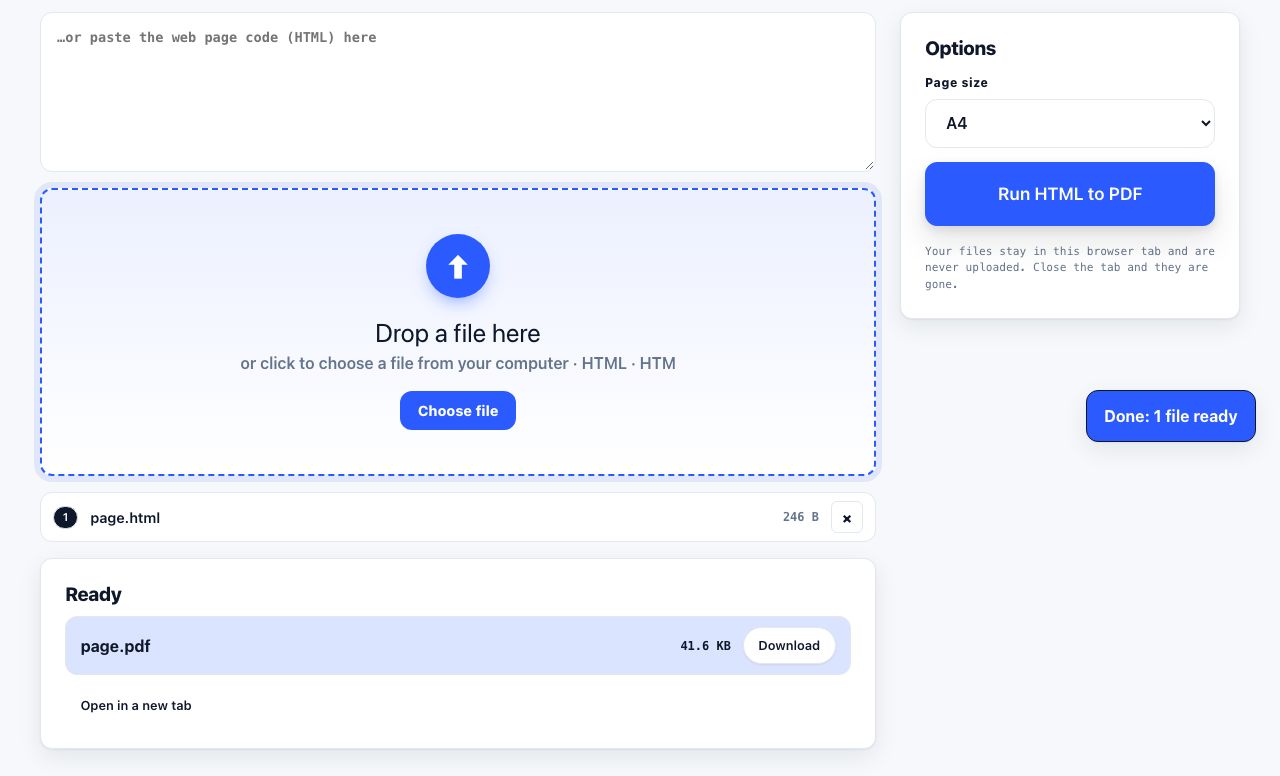
Turn the page you are citing into a clean, dated PDF you can file alongside the reference.
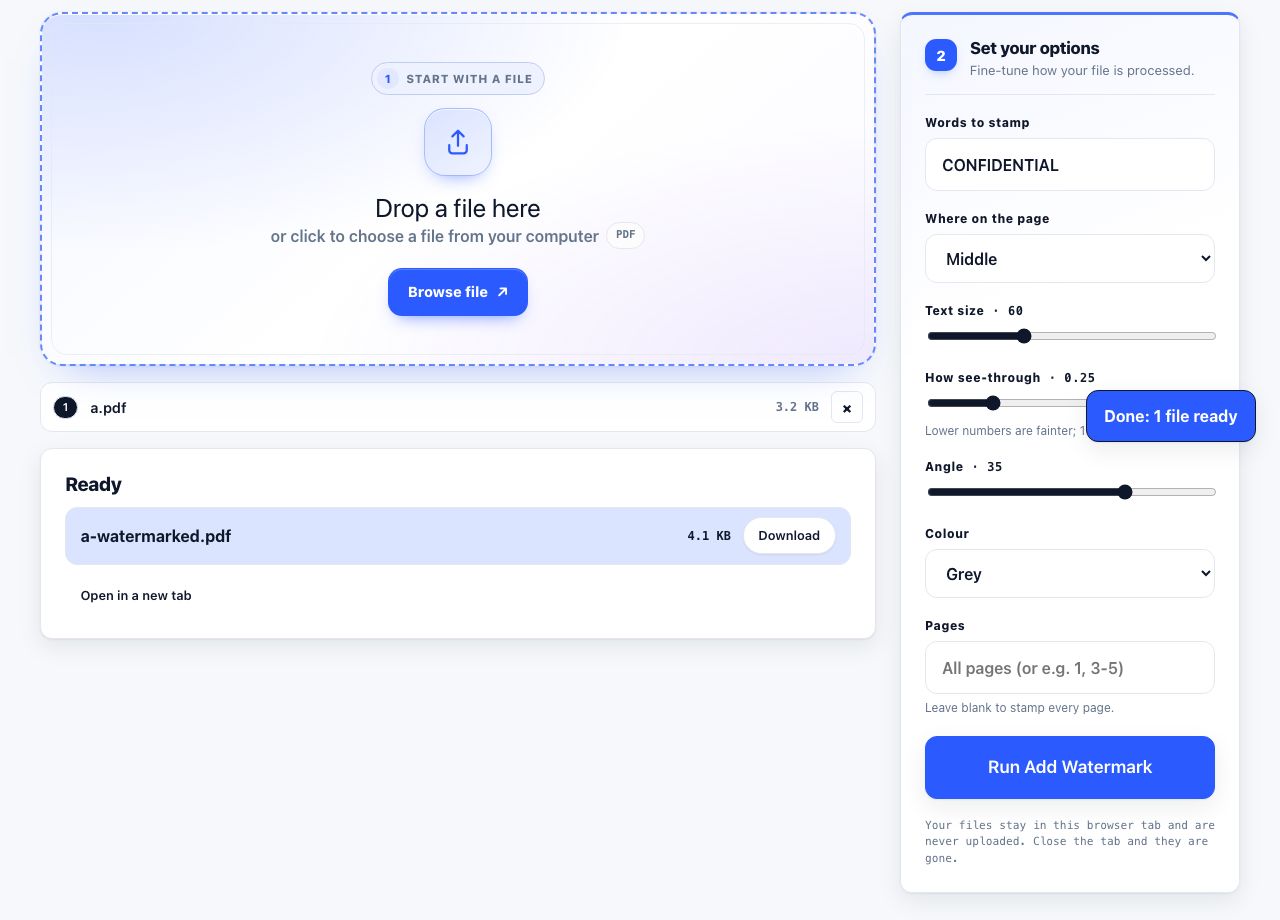
HTML to PDF →Stamp the retrieval date across your captured page so the copy speaks for itself.
Add Watermark →Let software do the formatting, but check it
Zotero, Mendeley and the citation tools in Word and Google Docs all produce a formatted entry from a URL, and all fail in predictable ways: a section name mistaken for an author, sentence-case titles capitalised, a publication date buried in the metadata missed, and a retrieval date APA no longer wants appended. Generate, then check each entry against the patterns above.
For the mechanics, see saving a web page as a PDF and paper versus PDF for records. For marking up sources, see annotating PDFs for study.
Frequently asked questions
Do I need an access date when citing a website?
In APA 7 only when the content is designed to change and is not archived, such as a live map or a wiki. MLA 9 makes it optional but recommends it. Chicago 17 wants it only when no publication or revision date exists. When in doubt, include it.
How do I cite a web page with no author?
Move the page title into the author position. APA puts the title first followed by the date in brackets; MLA and Chicago simply begin the entry with the title. If an organisation clearly owns the content, use the organisation as the author instead.
Should the URL be a live hyperlink in my bibliography?
APA 7 accepts either plain text or a live link as long as the formatting is consistent through the document. MLA 9 and Chicago 17 both accept plain text. Never use a shortened URL, and never break a URL with a manual hyphen.
What is the difference between APA 6 and APA 7 for websites?
APA 7 drops the "Retrieved from" prefix before URLs, drops retrieval dates for most sources, and adds the site name as a separate element after the title. If your reference begins "Retrieved from http", you are still writing APA 6.
Can I cite a page that has since been deleted?
Yes. Cite the archived capture: give the original details, then the archive URL and the capture date. All three styles accept an archived version, and a Wayback Machine link is far stronger evidence than a dead original.